Eddystone
Winstanley, Rudyerd, Smeaton and the later Douglass tower. Foundations, materials and the long argument with the reef.
Read EddystoneField notes / coastal engineering
How British and Irish lighthouses turn dangerous water into readable signals. Follow the structures from Eddystone’s exposed rock to the automated stations of the modern coast.
Open the guide index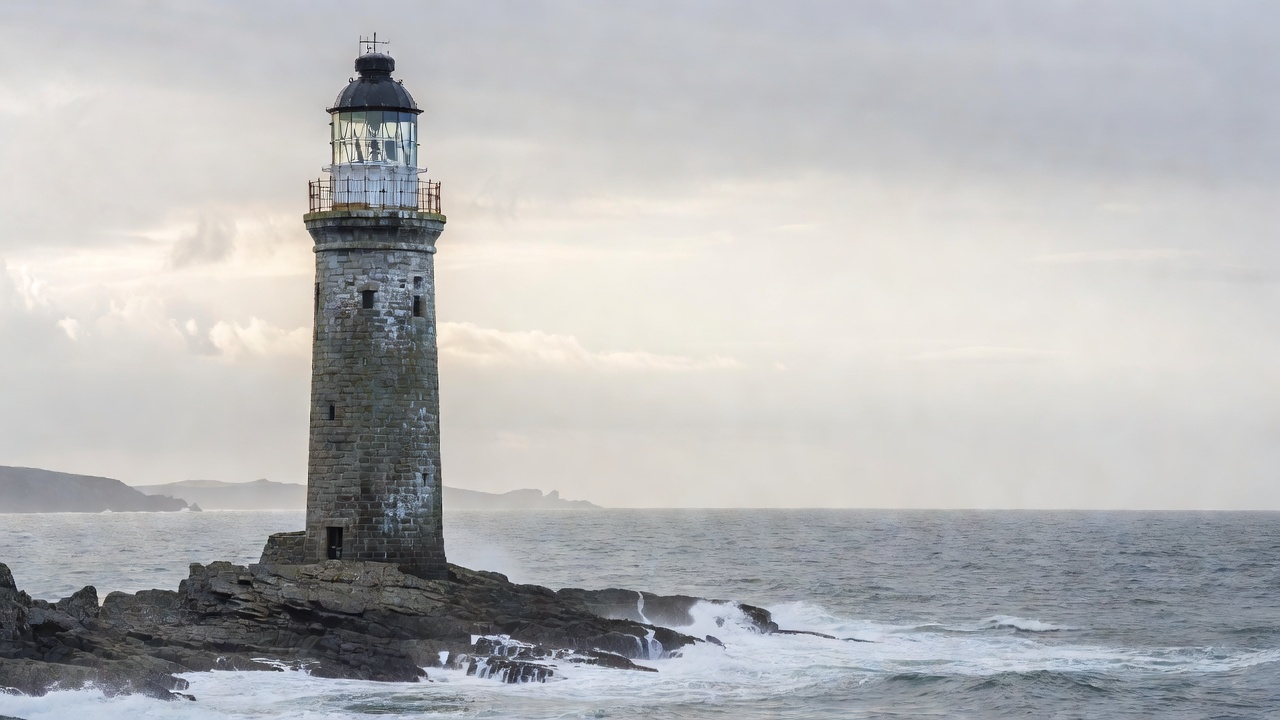
Five case studies
Winstanley, Rudyerd, Smeaton and the later Douglass tower. Foundations, materials and the long argument with the reef.
Read EddystoneRobert Stevenson’s interlocking masonry, the reef’s tidal limits and the Northern Lighthouse Board’s model of practice.
Read Bell RockAlan Stevenson’s tapering granite tower, wave exposure and the optical language of a major Scottish offshore light.
Read SkerryvoreIrish granite, Atlantic weather and the Commissioners of Irish Lights at Ireland’s offshore landmark.
Read FastnetAnglesey’s cliff station, access by steps and the difference between a spectacular setting and an offshore foundation.
Read South StackWorking question
Towers became more stable, optics more precise and operation less dependent on resident keepers. The sites did not become simple. Their risks moved from daily attendance towards maintenance, power, communications and access. Institutions carried that change: Trinity House around England, Wales and the Channel Islands; the Northern Lighthouse Board in Scotland and the Commissioners of Irish Lights around Ireland.